


Dentistry without the needle and the drill
The Solea all-tissue laser lets us complete most fillings and many soft-tissue procedures with no freezing, no drill, and, for the great majority of patients, nothing that feels like anything at all.
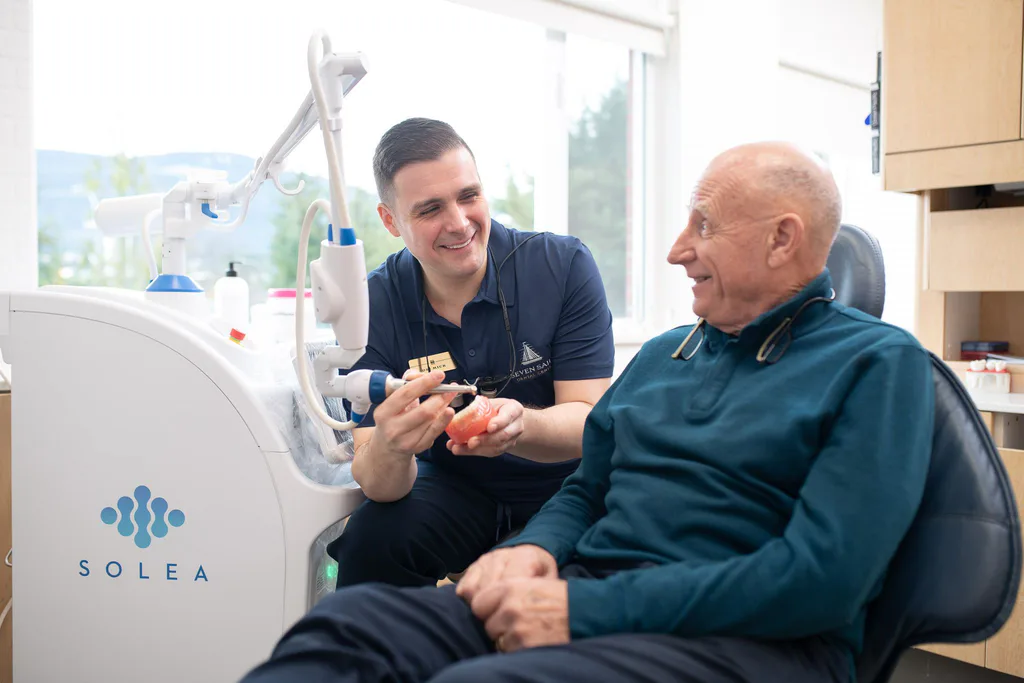
What the Solea laser is
Solea is an all-tissue dental laser. It works on enamel, dentin, bone and soft tissue alike, which is what separates it from the older, soft-tissue-only lasers many practices use.
It removes decay with a precisely controlled beam of light rather than a rotating bur. There's no vibration, no pressure and no high-pitched whine. And at the wavelength and settings it works at, it has an anaesthetic effect on the nerve as it goes, which is why most procedures don't need freezing at all.
What that means for your appointment
Virtually anaesthetic-free
The great majority of Solea procedures are completed without any local anaesthetic. No needle, no waiting for freezing to take, and no numb lip for the rest of the day. You can eat lunch normally and go back to work able to speak properly.
No drill
No vibration, no pressure, and none of the sound most people find worse than the sensation. For patients whose anxiety is rooted in the drill, and that's a great many of them, this alone changes the experience.
Comfortable enough that most patients feel very little
Our patients tell us most Solea procedures feel like nothing more than a cool sensation and a small puff of air.
Faster healing
Laser treatment of soft tissue is precise, largely bloodless, and seals as it works. Sites typically heal faster, with less swelling and discomfort than a scalpel produces. The laser also provides photobiomodulation, low-level light that stimulates cellular repair.
More conservative treatment
Because the beam can be controlled far more precisely than a bur, we remove decay and leave healthy tooth structure alone. A tooth that keeps more of itself lasts longer.
More done in one appointment
With no freezing to wait for and no need to numb a whole quadrant to treat one tooth, we can often treat several teeth in different parts of the mouth in a single visit.
What we treat with the laser
Fillings
Most cavities can be prepared and restored with no freezing.
Soft tissue surgery
Gum recontouring, biopsies and minor oral surgery: precise, largely bloodless, and with excellent healing. Where a lesion needs investigating, the laser produces a clean, high-quality tissue sample for pathology.
Advanced laser-assisted periodontal therapy
For patients with gum disease, laser therapy targets bacteria in the periodontal pocket and helps the tissue reattach to the tooth. More comfortable than conventional deep cleaning alone, and more effective in combination with it.
Root canal treatment
The laser cleans and disinfects the root canal system more accurately and efficiently than files alone, reaching areas conventional instruments can't.
Tongue tie and lip tie release
A tongue or lip tie can interfere with breastfeeding in infants, and with speech, eating and oral hygiene in older children and adults. Laser release is quick and precise, typically needs no sutures, and heals rapidly.
Solea Sleep, for snoring
A non-surgical laser treatment for snoring. A brief, painless application of laser energy tightens the soft tissue at the back of the throat, reducing the vibration that produces the sound. It takes minutes, needs no anaesthetic and no downtime, and most patients notice a difference the same night.
The effect isn't permanent; it's generally maintained with periodic treatments. It treats snoring, not obstructive sleep apnea. If your snoring comes with daytime exhaustion, gasping or pauses in breathing, we'll refer you for a sleep assessment first, because that's a medical condition that needs proper diagnosis.
If you're afraid of the dentist
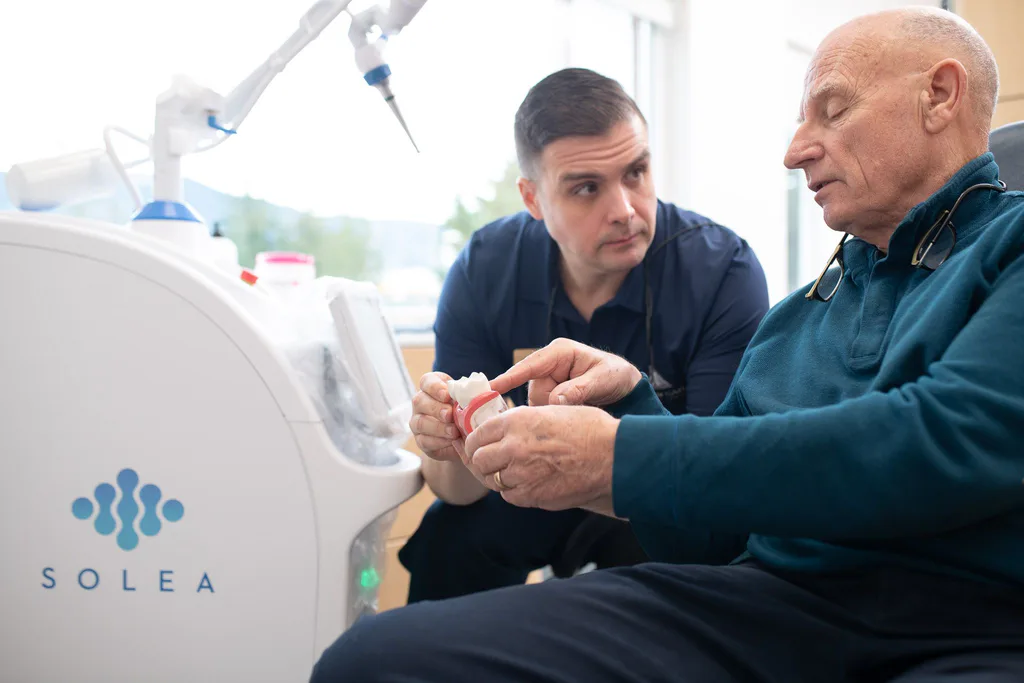
Dental anxiety is extremely common, and there's nothing unusual about it. It's also, very often, specifically about the needle and the drill, which is exactly what this technology removes.
If fear is the reason you've been putting off an appointment, tell us when you book. We'll give you extra time, explain everything before we do it, stop the moment you ask, and start with the least demanding thing on the list. There's no lecture waiting for you here.
Common questions about laser dentistry
Most patients report feeling nothing beyond a cool sensation and a puff of air.
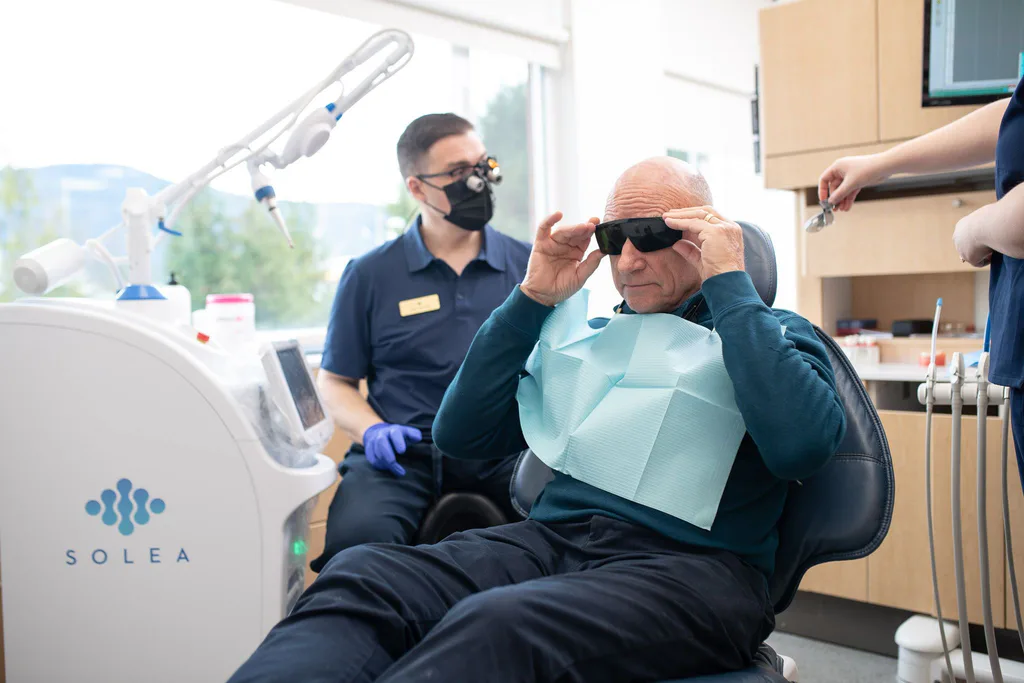
Solea is FDA-cleared and Health Canada licensed, and all-tissue lasers have been used in dentistry for years. You'll wear protective eyewear during treatment.
Most people and most procedures, but not all. Some treatments still call for conventional instruments, and we'll tell you plainly which applies to you.
Usually not, and that's one of the main advantages. Most patients leave able to eat, drink and speak normally straight away.
Yes, and it's often ideal for children, who tend to find the needle the worst part of a dental visit by a wide margin.